- Home
- About Byone
- Factory Tour
- Products
- Project Portfolio
- Download
- Blog
- Contact Us
Leave Your Message
China has become a major hub for Energy-Efficient Lighting development and production. Its manufacturers serve homes, offices, factories, streets, warehouses, and public facilities worldwide. This article explores how leading suppliers combine LED technology, optical design, thermal management, and automated production.
A reliable manufacturer should provide more than attractive product photos. Buyers need clear lumen output, wattage, color temperature, power factor, and lifespan data. Factory audits can reveal testing rooms, aging racks, assembly lines, and quality-control procedures. Certifications such as CE, RoHS, UL, or relevant regional approvals may support market access, but they should be verified for each product and destination.
Details matter.
Experienced suppliers often use aluminum heat sinks, stable LED drivers, sealed housings, and carefully designed lenses. These choices affect efficiency, glare, color consistency, and long-term maintenance. Independent photometric files and recognized testing reports can strengthen technical confidence. However, performance claims are not always directly comparable. A stated lifespan may depend on temperature, operating hours, and acceptable lumen depreciation.
This guide highlights reputable Chinese manufacturers by examining product portfolios, engineering capabilities, customization services, certifications, export experience, and after-sales support. It also considers practical concerns, including minimum order quantities, sample testing, communication speed, and spare-part availability. Some comparisons remain imperfect because public factory information can change. Therefore, readers should request current documents, inspect samples, and confirm standards before signing contracts. Efficient lighting is valuable, but dependable performance requires evidence, not promises.
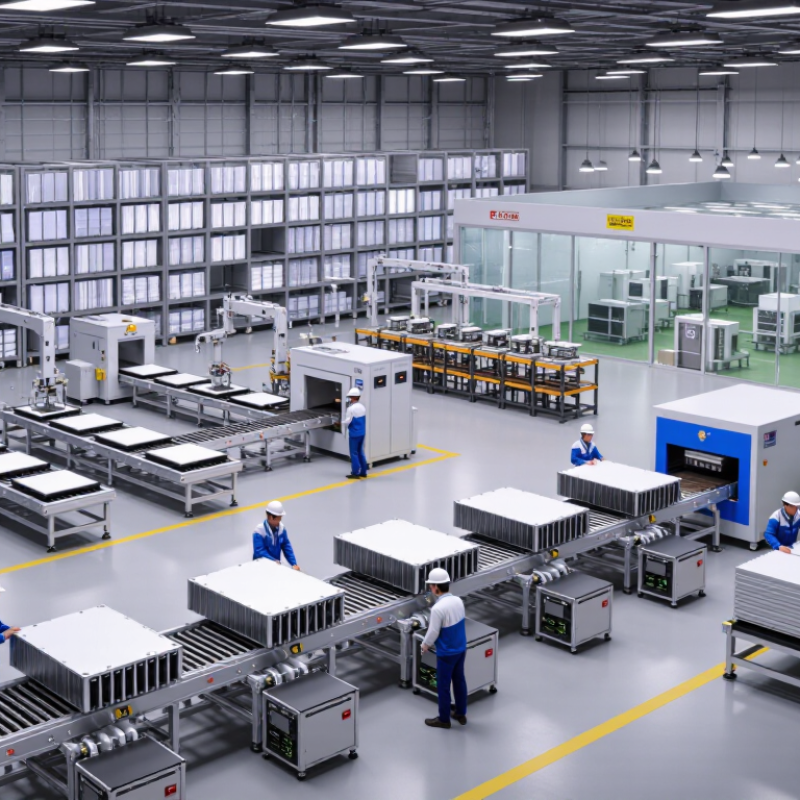
China’s energy-efficient lighting manufacturers operate within a rapidly changing global market. According to the International Energy Agency, LEDs represented 50% of global lighting sales in 2022. This shift reflects lower electricity use, longer service life, and wider availability. It also raises practical questions about quality. A low purchase price does not guarantee efficient performance.
Tips: Compare lumens per watt, not wattage alone. Check performance at the intended temperature. Request independent testing for large projects. Review warranty terms and spare-part availability. Small details matter.
Experienced buyers should examine tested lumen output, thermal management, and expected lifetime. Factory audits can reveal assembly consistency, component traceability, and realistic quality-control procedures. In procurement reviews, sample testing often exposes differences hidden by polished specifications. China remains important for scalable lighting production, but capability varies between factories. Strong suppliers explain design limits instead of promising perfect results. That honesty matters in warehouses, offices, streets, and homes. Buyers should also review installation conditions, because poor wiring or heat buildup can reduce expected savings. The market is mature, yet not every LED solution is equally efficient.
Non-company market and product benchmark for evaluating energy-efficient lighting manufacturers in China
| Evaluation Dimension | Market or Product Segment | Verified Data Point / Benchmark | Relevance When Assessing Manufacturers | Reference |
|---|---|---|---|---|
| Global LED adoption | General lighting market | LEDs reached approximately 50% of global lighting sales in 2022. | Indicates that LED technology has become a mainstream replacement for conventional lighting. | International Energy Agency, 2022 |
| Chinese product compliance | LED lamps and luminaires sold in China | GB 30255-2019 establishes minimum allowable energy-efficiency values and energy-efficiency grades for LED products. | A supplier should provide test reports demonstrating compliance with applicable Chinese energy-efficiency requirements. | China National Standard GB 30255-2019 |
| Indoor commercial lighting | LED panels, downlights and linear fixtures | Typical commercial LED specifications commonly target approximately 100–160 lm/W at the luminaire level, depending on design and application. | Luminaire efficacy should be compared with glare control, color consistency, power-factor performance and warranty terms. | Application benchmark; verify through product test reports |
| Industrial high-bay lighting | Warehouses, factories and logistics facilities | High-bay LED systems are commonly specified in the approximate range of 130–190 lm/W, subject to optics, thermal design and operating conditions. | Thermal management, ingress protection, surge protection and maintained light output are key selection indicators. | Application benchmark; verify through independent testing |
| Outdoor and roadway lighting | Streetlights, area lights and tunnel fixtures | Performance must be evaluated at the complete luminaire level rather than by LED-chip efficacy alone. | Optical distribution, uniformity, glare limitation, surge immunity and programmable controls affect real energy savings. | CIE roadway-lighting principles and IEC 60598-2-3 |
| Smart-lighting capability | Connected indoor and outdoor systems | Dimming, occupancy sensing, daylight harvesting and scheduling can reduce operating hours and installed lighting load. | Manufacturers should document interoperability, control protocols, cybersecurity practices and measured savings assumptions. | IEA energy-efficiency and smart-building guidance |
| Electrical and EMC performance | LED drivers, lamps and complete luminaires | Relevant requirements include electrical safety, electromagnetic compatibility, power quality and protection against abnormal operating conditions. | Independent reports should identify test standards, rated input conditions, power factor and total harmonic distortion where applicable. | IEC 60598 series; GB 7000.1; GB 17625.1 |
| Environmental durability | Industrial, outdoor and hazardous operating environments | Ingress-protection ratings are defined under IEC 60529; higher IP ratings provide stronger protection against dust and water ingress. | The required IP rating depends on installation conditions and should be supported by laboratory test evidence. | IEC 60529 |
| International market access | Export-oriented LED lighting products | Common market-access requirements may include electrical safety, EMC, photobiological safety, chemical restrictions and product documentation. | A capable manufacturer should offer traceable test reports and technical files for the destination market. | IEC 60598; IEC 62471; EU RoHS Directive 2011/65/EU |
| Product-life assessment | All energy-efficient lighting categories | A meaningful comparison should use rated life, lumen maintenance, failure rate, operating temperature, warranty period and repairability together. | Long-term value depends on maintained light output and total cost of ownership, not initial wattage reduction alone. | IES LM-80, TM-21 and LM-84 methods; manufacturer test documentation |