What is Smart Lighting For Home Benefits and Features?
Smart Lighting For Home offers a transformative way to enhance living spaces. According to lighting expert John Smith, "Smart lighting not only brightens our homes but also elevates our lifestyle." With advancements in technology, smart lighting systems allow homeowners to tailor lighting based on their needs and moods.
Imagine entering your home and having the lights adjust automatically to your preference. This convenience is a key benefit of Smart Lighting For Home. It simplifies daily routines and creates an enjoyable atmosphere. The energy efficiency of these systems adds to their appeal, reducing electricity bills over time.
However, with so many options available, choosing the right system can be overwhelming. Homeowners may struggle to find the balance between functionality and aesthetic appeal. Without proper research, one could easily invest in a product that does not meet their needs. Thus, understanding the core features of Smart Lighting For Home is vital for making an informed decision.
Understanding Smart Lighting Technology for Home Use
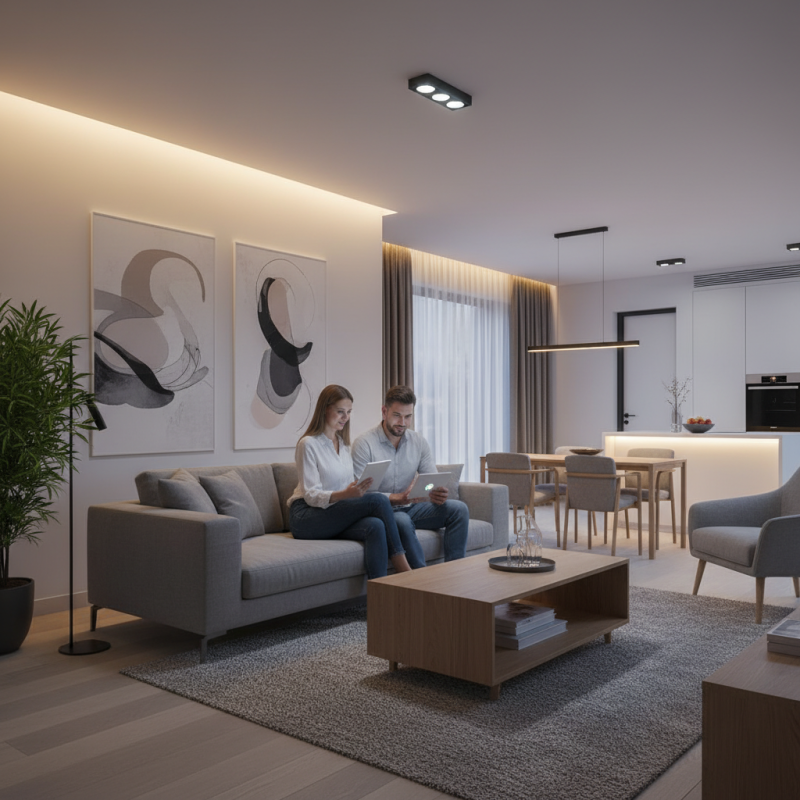
Smart lighting technology has transformed how we illuminate our homes. This innovation offers more than just a way to light up a room. It allows customization, energy efficiency, and enhanced convenience, transforming spaces into functional environments.
The core principle of smart lighting lies in its connectivity. Homeowners can control their lights through apps or voice commands. This makes it easy to adjust brightness or color settings. For instance, a warm glow can create a cozy atmosphere in the evening. More vibrant colors can energize your mornings. However, not everyone is tech-savvy. Some users might find the setup challenging. It's essential to follow user manuals closely and seek online tutorials for guidance.
Tips: Begin by selecting a few key areas in your home for smart lighting. Kitchen and living rooms are good starting points. Implement gradual changes, allowing familiarization with the technology. Also, consider investing in smart bulbs with a wider range of colors. They can enhance your mood and cater to different activities. Balancing innovation with simplicity is crucial. Experiment with various settings until you find what works best for your space.
Benefits of Implementing Smart Lighting at Home
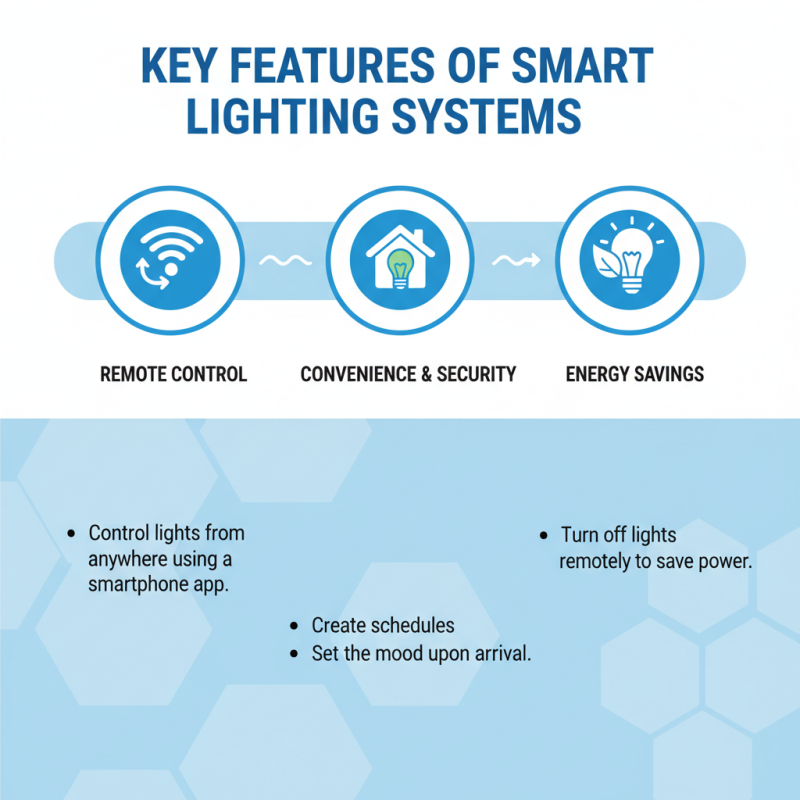
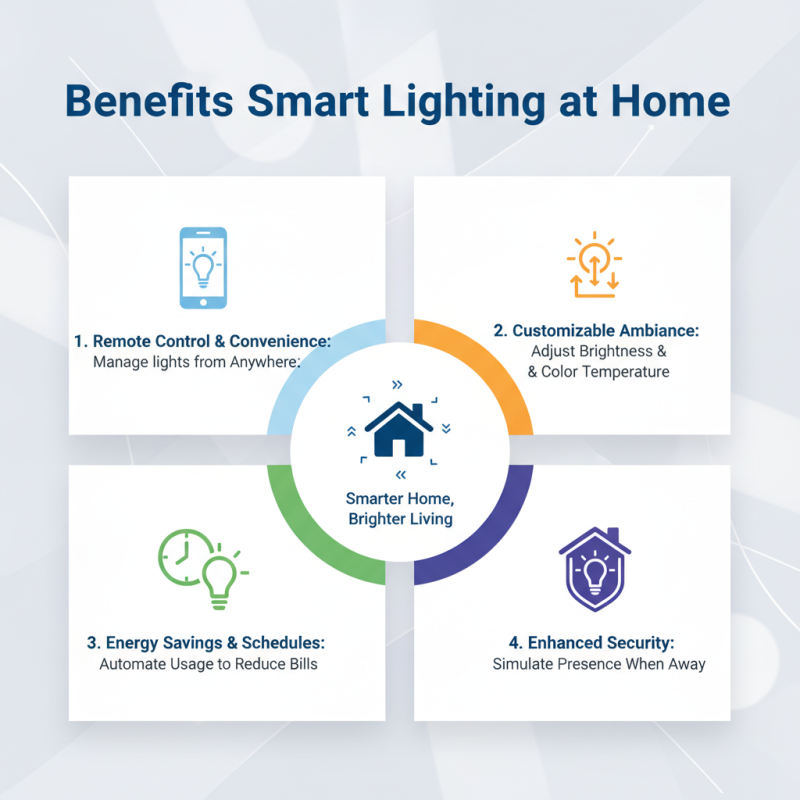
Smart lighting systems have revolutionized home environments. They offer versatility and convenience. These systems allow homeowners to control lights remotely, adjust brightness, and even set schedules. They can enhance security by simulating presence when you're away.
One significant benefit of smart lighting is energy efficiency. LED bulbs consume less power than traditional ones. You can also set timers to turn off lights when not in use. This can lower energy bills significantly. Comfort is another advantage. Imagine soft lighting that transitions with your activities. Whether you are watching a movie or hosting friends, the right lighting creates the perfect ambiance.
Tips: Consider installing motion sensors for convenience. They automatically turn lights on when you enter a room. This feature avoids unnecessary energy waste. Also, think about integrating smart lighting with your home assistant. Voice control can enhance your home experience, making it truly hands-free.
Sometimes, smart lighting might be complicated to set up. Technical glitches can occur, leading to frustration. Be patient and troubleshoot any issues. It may take time to find the right setup for your routine. Each adjustment can lead to a more personalized and efficient environment.
Comparing Smart Lighting with Traditional Lighting Solutions
Smart lighting systems are transforming the way we illuminate our homes. Compared to traditional lighting solutions, smart lighting offers significant advantages. A report from the American Lighting Association states that smart lighting can reduce energy consumption by up to 30%. This reduction not only lowers energy bills but also decreases the carbon footprint of a household.
In contrast, traditional lighting typically lacks the energy efficiency of smart systems. Incandescent bulbs, for example, convert only about 10% of energy into light. The rest is lost as heat. Additionally, smart lighting systems provide enhanced control. Homeowners can adjust intensity and color using mobile apps or voice commands. This level of customization creates optimal comfort and mood. However, the technology is not without its flaws. Connectivity issues can occur, and initial setup can be complicated. Experts suggest that user experience can vary widely based on individual tech skills.
A running survey indicates that approximately 40% of users encounter issues syncing their smart lights with home ecosystems. This raises questions about reliability, even as more people adopt smart home technologies. Users need to weigh these considerations carefully when transitioning from traditional lighting.
Benefits of Smart Lighting vs Traditional Lighting
Integrating Smart Lighting with Home Automation Systems
Integrating smart lighting with home automation systems opens up a world of convenience and efficiency. Imagine walking into your home, and the lights adjust automatically to match your mood. You can set the lighting to mimic a sunrise, helping you wake up naturally. This seamless integration creates a personalized atmosphere that can change with your preferences.
Smart lighting systems can also enhance security. Automated lights can deter intruders when you are away. They can mimic your presence by turning on and off at set intervals. However, this feature might not work flawlessly in every situation. Sometimes, schedules may become misaligned or lights may malfunction unexpectedly. It’s essential to regularly check and maintain these systems to ensure they operate correctly.
Home automation doesn't just enhance comfort; it can also connect various devices for efficiency. You can create scenes for different activities, like movie nights or dinner parties. But the complexity of setup can be daunting for many. Each device might have a different app or interface, leading to potential frustration. Learning to manage these connections is part of the journey toward a more automated home.