Choosing the right Kitchen Cabinet Led Lights supplier in China requires more than comparing prices. Buyers must examine optical performance, aluminum profiles, wiring quality, certifications, customization capacity, and after-sales support. A bright sample may still create glare, uneven cabinet illumination, or visible hotspots after installation.
Lighting designer Randall Whitehead describes lighting as “the jewelry of architecture.” His observation fits kitchen cabinetry well. Small details matter. A warm 3000K strip can soften white cabinets, while a 4000K option may improve worktop visibility. Diffusers should produce a continuous line of light, not a dotted effect beneath the shelves. Reliable suppliers should explain these differences clearly, using test reports and practical samples.
This guide explores leading Chinese Kitchen Cabinet Led Lights suppliers and the strengths that separate them. It considers factory experience, LED binning, color consistency, waterproof protection, dimming systems, and production inspection. It also reviews communication speed, sample accuracy, minimum order quantities, and private-label support. These factors often matter more than a low quotation.
Real kitchens are unforgiving.
A supplier may promise a five-year lifespan, yet installation conditions can shorten it. Poor ventilation, overloaded drivers, or careless connectors create avoidable failures. Therefore, responsible buyers should request product datasheets, aging-test evidence, warranty terms, and installation guidance before placing large orders. No supplier is perfect, and some published specifications deserve closer questioning. That is not cynicism. It is practical sourcing.
The best choice depends on your project, market, and installation expectations. A hotel renovation needs different support from a small retail brand. This comparison aims to make that decision clearer, more measurable, and less dependent on attractive sales language.
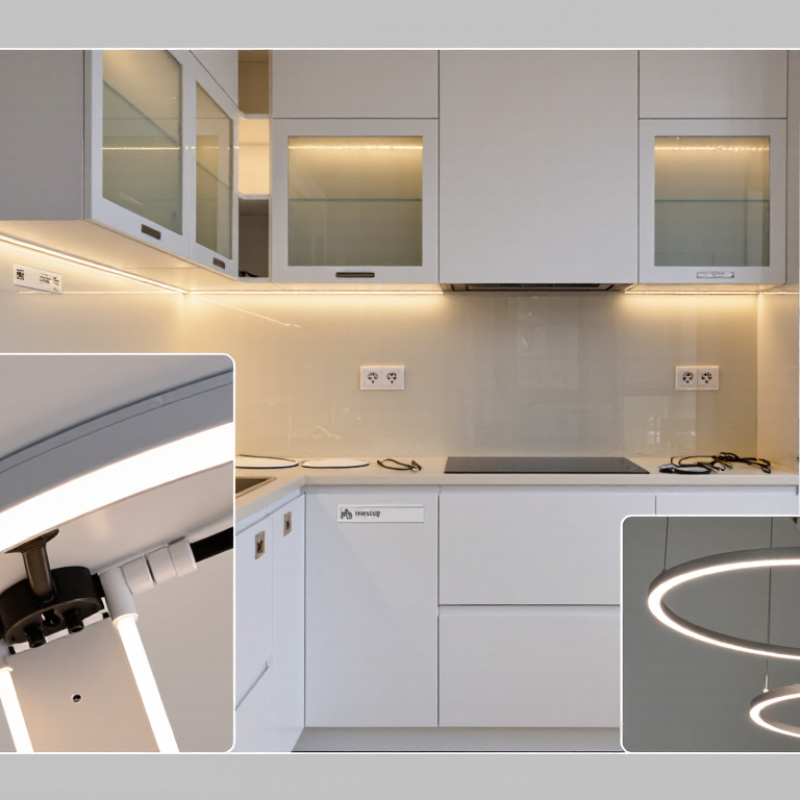
Kitchen cabinet lighting is moving from decorative brightness toward measurable efficiency. The U.S. Department of Energy’s 2024 Solid-State Lighting report identifies 100 lm/W as a practical commercial benchmark for many LED systems. For cabinet applications, reliable suppliers should provide 80–120 lm/W at system level, not only at chip level. This difference matters. A diffuser, aluminum profile, connector, and driver can reduce output noticeably.
Market outlooks from Research and Markets and Mordor Intelligence indicate continued growth in under-cabinet and residential LED lighting through 2029, with smart controls, tunable white, and low-voltage systems gaining attention. The trend is visible in real kitchens: users want warm evening light, cooler task lighting, and dimming without visible flicker. However, a forecast is not a purchase specification. I would request LM-79 test data, a minimum CRI of 90, stable color consistency, and thermal measurements at 25°C and 40°C.
Efficiency claims still need careful review. A 110 lm/W product may perform well in a laboratory but appear weak behind a frosted lens. That is a practical gap. The International Energy Agency continues to identify LED conversion as a major lighting-efficiency opportunity, yet installation quality remains uneven. Suppliers should show photometric files, driver efficiency, warranty terms, and sample results from finished assemblies. I have found that simple testing under an actual cabinet often reveals more than a polished datasheet.
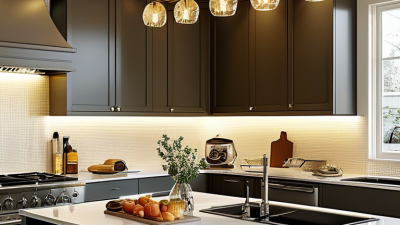
Choosing China kitchen cabinet LED light suppliers requires more than comparing prices. The listed LED specifications should match the kitchen’s mood and working needs.
Many kitchens benefit from 3000–3500K, but this depends on wall colors and existing ceiling lights.
CRI ≥90 is important for accurate food and material colors. Red vegetables should look red, not dull brown.
Brightness also needs careful checking. A rating of 300–800 lumens per meter suits different cabinet depths and task areas.
Lower output may work under display shelves, while stronger output helps illuminate dark countertops. Ask suppliers for lumen test conditions, power consumption, beam angle, and photometric reports.
A specification sheet can look excellent, yet diffuser quality and heat control may reduce real performance.
Tips: Request samples in 2700K, 3000K, and 4000K. Compare them beside your actual countertop.
One detail is easy to overlook: excessive brightness can create glare on polished stone. Test before ordering.
Suppliers that provide clear test data, stable samples, and practical installation guidance are usually more dependable. Still, recheck every claim against independent testing when possible.
China’s cabinet lighting suppliers usually fall into three groups: OEM, ODM, and custom manufacturers. OEM factories build your approved design, packaging, and specifications. ODM suppliers offer tested products that can be adjusted for your market. Custom manufacturers develop the lighting structure, controls, profiles, and installation method together.
The opportunity is growing. Grand View Research valued the global LED lighting market at about USD 78 billion in 2023. Its report also forecasts strong growth through 2030. The International Energy Agency reports that LED products now represent more than half of global lighting sales. These figures support demand, but kitchen lighting needs closer evaluation. Brightness alone is not enough.
Ask suppliers for test data covering CRI, color consistency, flicker, thermal performance, and lifetime ratings. A practical sample should include an aluminum profile, diffuser, connector, sensor, and power supply. Check whether the light stays cool after several hours inside a closed cabinet. It matters.
OEM is efficient for established specifications. ODM can shorten development time. Custom manufacturing offers better control, though it usually requires more engineering communication and larger minimum orders. Catalogues make this process look simple. It is not always simple. Some suppliers describe minor revisions as “custom design,” so buyers should verify drawings, prototypes, inspection records, and applicable safety documentation before production.
Top China Kitchen Cabinet LED Lights Suppliers?
A supplier’s MOQ should match your sales plan, not merely its factory target. An attractive MOQ may hide setup costs. Ask whether it applies to one model, one finish, or a mixed order. For a small kitchen project, request a sample before committing to bulk production. Check brightness, color temperature, cable length, and connector fit. Record these details in the purchase specification.
A realistic 30–45-day lead time should include production, testing, and packaging. Ask for a dated schedule, not a flexible promise. Clarify when the clock starts: deposit payment, sample approval, or artwork confirmation. Request current, product-specific CE, RoHS, and EMC test documents where applicable. An ISO 9001 certificate shows process management, but it does not prove every lamp meets your requirements. Verify certificate numbers and issuing organizations independently.
Quality assurance needs visible checkpoints. The supplier should inspect incoming LEDs, solder joints, dimming performance, and insulation. Ask for a pre-shipment inspection with photographs and random test records. A useful report lists sample size, failures, corrective action, and final approval. I once treated a passing sample as complete evidence; that was careless. A production batch can still show uneven color or loose connectors. Keep retained samples, define acceptable defect limits, and confirm warranty handling in writing. Small details matter.
Procurement planning model based on a 30–45-day production window. MOQ levels are shown as order-size reference points, while certification and QA requirements should be verified through current supplier documentation.
Top China Kitchen Cabinet LED Lights Suppliers?
When comparing China-based kitchen cabinet LED light suppliers, start with the IP44 rating. Under IEC 60529, IP44 resists solid objects above 1 millimetre and water splashes from different directions. It does not mean waterproof. A light beside a sink still needs careful placement, sealed connectors, and proper installation. In real kitchens, steam and grease expose weak housings quickly.
The advertised 50,000-hour life also needs closer inspection. The U.S. Department of Energy’s solid-state lighting reports explain that LED life is commonly measured by L70, meaning output falls to 70% of its initial level. It does not promise 50,000 hours without failure. Ask suppliers for LM-80 test data, driver specifications, operating temperature, and measured lumen maintenance. Some suppliers provide impressive figures but vague test conditions. That gap matters.
Warranty length should be compared with its exclusions. Check coverage for drivers, adhesive failure, color shift, flicker, and water-related defects. A longer warranty is useful only when the claim process is practical. Request a written response-time commitment, replacement-part availability, installation guidance, and batch traceability. IEA energy-efficiency research continues to identify lighting as a major electricity-use category, so dependable performance affects operating costs. My own caution is simple: sample testing is never optional. One cabinet sample may look excellent, while a full shipment reveals uneven brightness or loose connectors.
| Anonymous Supplier Profile | Typical Product Configuration | IP Rating | Claimed LED Life | Warranty Term | Quality Documentation | After-Sales Support | Best-Fit Buyer |
|---|---|---|---|---|---|---|---|
| Profile A — Standard OEM Supplier | Under-cabinet linear light; 3000K–6500K; aluminum housing; touch switch option | IP44 available | Up to 50,000 hours* | 2 years | Product specification, routine test report, export packaging checklist | Replacement parts and remote troubleshooting; response target usually 1–2 business days | Private-label projects with standard technical requirements |
| Profile B — Customization-Focused Supplier | Modular cabinet light; cut-to-length options; PIR sensor or door sensor; dimming control | IP44 or higher by model | 30,000–50,000 hours* | 2–3 years, model dependent | IES/LDT photometric file on request; EMC and safety documents vary by SKU | Engineering support, sample revisions, wiring diagrams, spare sensor supply | Furniture manufacturers and project-based buyers |
| Profile C — High-Volume Contract Supplier | Rigid or flexible LED strip system; aluminum profile; separate driver; bulk carton packaging | IP44 standard; higher protection optional | Up to 50,000 hours* | 3 years under defined operating conditions | Batch inspection records, incoming-material controls, packaging drop-test records when requested | RMA process, batch traceability, consolidated replacement shipments | Distributors and recurring container-volume orders |
| Profile D — Project Lighting Supplier | Complete system with light, driver, sensor, connectors, mounting clips, and installation guide | IP44 available; verify complete assembled system | 25,000–50,000 hours* | 2 years; extended terms may be negotiated | System BOM, installation instructions, electrical drawings, product test records | Remote commissioning assistance and installation consultation | Kitchen renovation, hospitality, and residential development projects |
| Profile E — Value-Oriented Supplier | Basic LED bar; fixed color temperature; plug-and-play driver; limited accessories | IP20–IP44 by model | 20,000–30,000 hours* | 1–2 years | Basic datasheet and pre-shipment inspection report | Standard replacement policy; limited customization support | Price-sensitive retail and small-batch orders |