Top Trends in Linear Light Pendant for 2026 Buyers Guide?
As we look ahead to 2026, the demand for innovative lighting solutions continues to rise. Among these, the Linear Light Pendant stands out as a popular choice for modern decor. Combining elegance with functionality, these pendants enhance the aesthetic of any space while providing ample illumination.
Linear Light Pendants offer versatility in design, appealing to diverse tastes and settings. From minimalist to industrial styles, they can redefine a room's ambiance. Their sleek lines and elongated shape create visual interest, making them perfect for various applications, such as dining areas and workspaces. However, selecting the right Linear Light Pendant can be challenging due to the overwhelming options available.
Buyers increasingly seek expert insights on trends and best practices. This guide aims to illuminate key aspects of Linear Light Pendants for 2026, focusing on current styles, materials, and technologies. While navigating through different possibilities, it’s essential to consider balance between aesthetics and functionality. Customers should reflect on personal preferences and the overall design of their space before making a decision.
Current Popular Designs in Linear Light Pendants for 2026
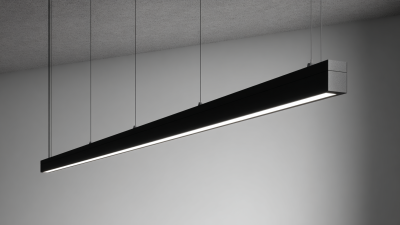
Linear light pendants are gaining popularity in modern interior design for 2026. These fixtures bring elegance and functionality. Current designs focus on minimalism, with sleek lines and geometric shapes. The trend showcases a balance of form and utility that appeals to many buyers.
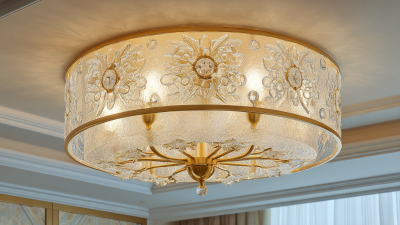
One popular option features matte black or brushed metal finishes. These colors provide a bold contrast against lighter interiors. Additionally, glass elements are becoming trendy for a touch of sophistication. Consider clear or frosted glass that diffuses light beautifully. This creates a warm, inviting atmosphere, perfect for dining areas or kitchens.
Another emerging trend is the integration of smart lighting technology. Buyers are seeking fixtures that can adjust brightness and color temperature. This functionality enhances mood and complements various activities. However, the complexity of installation might not suit everyone. Some homeowners find the learning curve for smart features a bit challenging. Balancing innovation with ease of use remains a consideration for many.
Top Trends in Linear Light Pendant for 2026 Buyers Guide
| Design Style |
Material |
Color Options |
Average Price (USD) |
Key Features |
| Modern Minimalist |
Aluminum |
Black, White, Gold |
$150 - $300 |
Energy-efficient, Adjustable Length |
| Industrial Chic |
Steel |
Bronze, Matte Black |
$200 - $400 |
Vintage Look, LED Compatible |
| Art Deco |
Glass, Crystal |
Clear, Gold Trim |
$300 - $600 |
Dazzling Design, Ambient Lighting |
| Natural Elements |
Wood, Bamboo |
Natural Wood Finish |
$180 - $350 |
Eco-friendly, Unique Textures |
| Sleek Linear |
Acrylic, LED |
White, Soft Blue |
$250 - $500 |
Slim Profile, Dimmable |
Materials and Finishes to Look for in Linear Light Pendants
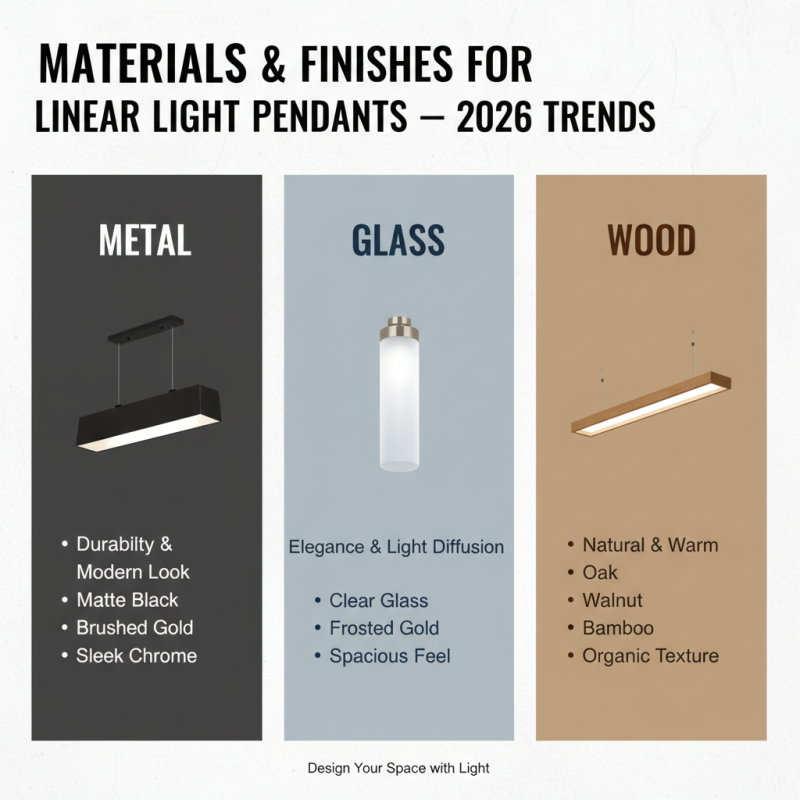
When considering linear light pendants for 2026, materials and finishes play a crucial role in design. Popular choices include metal, glass, and wood. Metal frames offer durability and a modern look. They are often finished in matte black, brushed gold, or sleek chrome. Each finish creates a unique ambiance. Glass pendants provide a sense of elegance. Clear or frosted glass can diffuse light beautifully, making spaces feel larger.
Wood adds warmth and texture to linear pendants. Reclaimed wood trends highlight sustainability. The imperfections in wood grain bring character. However, the maintenance required for wood can be a drawback. Ceramic finishes, though less common, can add artistry to designs. These materials require careful consideration for both functionality and style.
Lighting intensity can be influenced by the choice of materials. For instance, metallic finishes can reflect light, while wooden surfaces may absorb it. Evaluate your space's needs before making a decision. Balance aesthetic appeal with practicality. This exploration of materials reassures buyers in making informed decisions. Engaging with a variety of finishes enhances the overall interior design.
Technological Innovations Impacting Linear Light Pendant Choices
The world of linear light pendants is changing rapidly. Innovations in technology play a significant role in these transformations. Smart lighting options are becoming popular. These fixtures can be controlled by your smartphone. Users can adjust brightness and color temperature with ease.
Energy efficiency is another key factor. With advancements in LED technology, these pendants consume less power. They deliver high-quality light, enhancing any space. However, many consumers struggle to choose the right products. The variety in designs and functionalities is overwhelming.
Furthermore, the aesthetic appeal of linear light pendants is evolving. Minimalist designs are gaining traction, captivating buyers. Yet, finding the perfect balance between style and function remains a challenge. Buyers often feel uncertain about which features to prioritize. Making informed choices is crucial. Understanding new technologies can aid in this journey.
Top Trends in Linear Light Pendant for 2026
How to Choose the Right Size and Scale for Your Space
Choosing the right size and scale for linear light pendants can be tricky. The wrong size can disrupt your space's harmony. Consider the height of your ceilings. High ceilings benefit from larger fixtures, creating a dramatic look. For lower ceilings, smaller pendants can keep the room feeling open.
Think about the room’s dimensions. A long, narrow dining table pairs well with a longer pendant. It enhances the table's length. On the other hand, wide spaces can accommodate larger, more expansive designs. This creates balance in the room. Visualize the light fixture in the space before making a decision.
Measure the areas where you plan to hang the fixtures. Use tape to outline the dimensions. This step helps you see how the pendant interacts with the surroundings. Many overlook the height at which to hang the lights. Fixture height can impact how well the light spreads. Also, consider the overall aesthetic. Mixing too many styles can clutter the space. Aim for simplicity. Perfect matching is not necessary; contrast can also lead to dynamic designs.
Top Color Trends for Linear Light Pendants in 2026
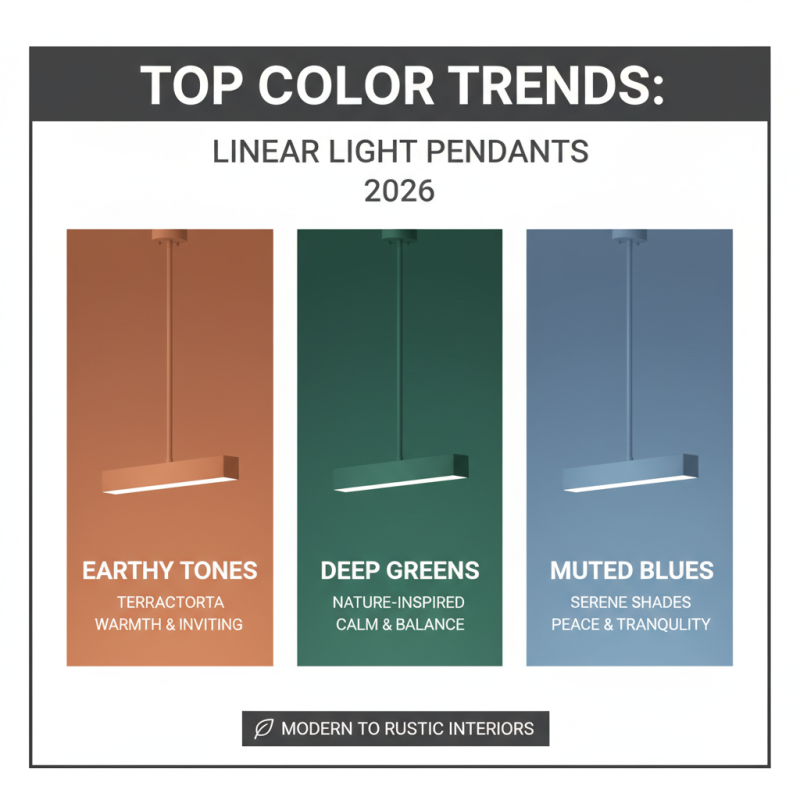
In 2026, the color trends for linear light pendants are expected to shift towards earthy tones and vibrant hues. Colors like terracotta, deep greens, and muted blues will dominate the market. These shades bring warmth and create an inviting atmosphere. They suit various interior styles, from modern to rustic.
Metallic finishes will also emerge strongly. Options like brushed brass and aged bronze add sophistication. These finishes complement the earthy colors well. They offer a striking contrast, making pendants a focal point in any room.
However, there's room for experimentation. Neutral tones remain popular, but incorporating bold colors can enhance creativity. Choosing unexpected color combinations might not appeal to every buyer. Still, those willing to explore will discover unique aesthetics and vibrant spaces.